We are not attorneys. This guide is for informational purposes only.
A growing number of free and low-cost tools now promise to read a photo of your parking ticket, ask a few questions, and hand back a written appeal in a couple of minutes. Tools like Parksy’s fine-appeal generator and the long-running DoNotPay have pushed this from a novelty into something a meaningful share of ticketed drivers are actually trying — and the tech press has taken notice through 2026 as more of these free tools launched.
The pitch is obvious: appeal letters are formulaic, most drivers don’t know what to argue, and an AI that has “read” thousands of municipal codes should, in theory, know what a hearing officer wants to see. The reality is more mixed, and the gap between what these tools do well and what they can’t verify is exactly where a driver needs to be careful.
What These Tools Actually Do
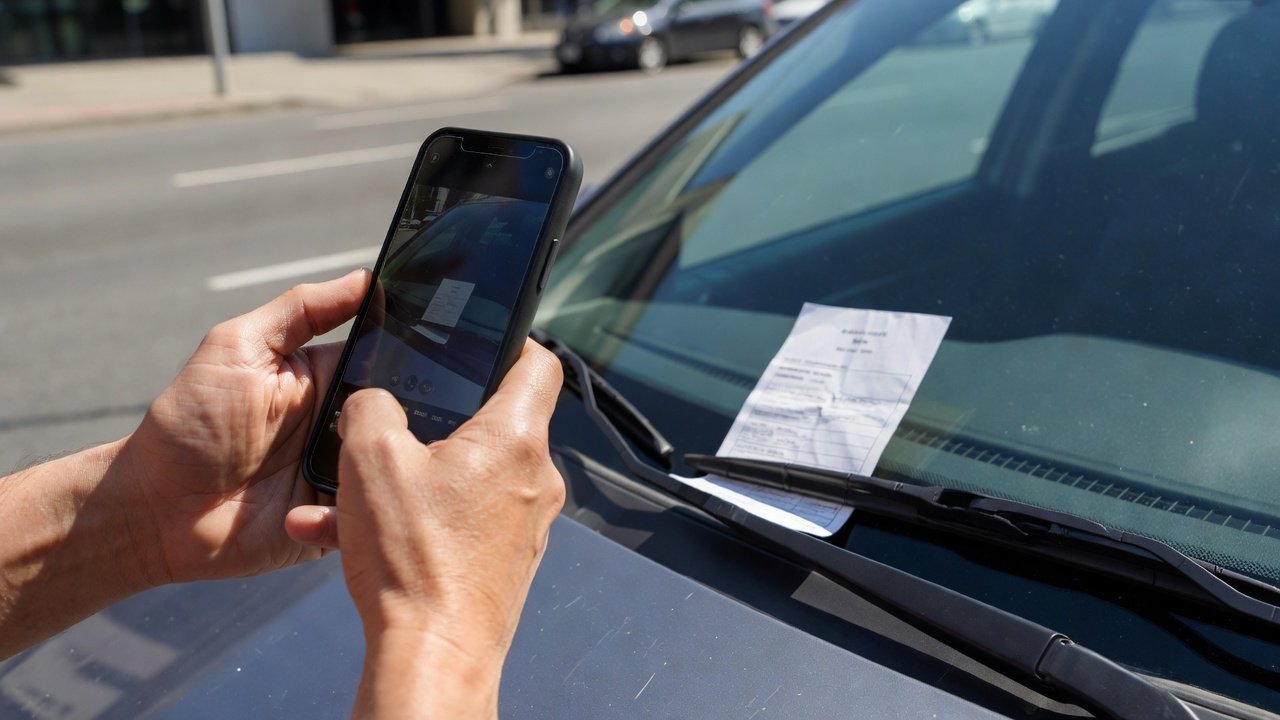
The current generation works roughly the same way regardless of vendor. You upload a photo of the citation, and the tool extracts the basics — reference number, vehicle, date, location, the alleged violation code, and the fine amount. It then asks a short series of follow-up questions about the circumstances: was there a broken meter, unclear signage, a payment app failure, a medical emergency, or a dispute about whether the vehicle was even there. Based on your answers, it drafts a formal appeal letter addressed to the correct office.
DoNotPay, the oldest and most-covered tool in this category, has been doing a version of this since 2015 and reports success-rate figures that vary noticeably depending on the source and time period cited — a company-reported 73% voiding rate, a 60% figure attributed to founder Joshua Browder, and a third-party count of roughly 160,000 wins out of 250,000 attempts (about 64%) over a 21-month stretch. Parksy, a newer entrant covering the UK, Australia, and the US, follows the same photo-in, letter-out model specifically for parking and Penalty Charge Notice disputes.
What They Get Right
Formatting and structure. A hearing officer or review clerk reads dozens of these a week. A tool that produces a clean, correctly addressed, properly formatted letter — citing the correct citation number and code section — removes an entire category of self-inflicted rejection that has nothing to do with the merits of your case.
Catching common, well-documented defenses. Broken meters, obscured or missing signage, and payment-app failures are exactly the kind of narrow, well-precedented categories a language model handles well, because the pattern (“driver alleges X, cites rule Y”) repeats across thousands of similar disputes the model was trained on.
Speed and low cost. Free or low-cost automated drafting removes the main reason most people don’t bother appealing at all: the time and hassle of writing a formal letter for a citation that might be $50–$100. Cities count on that friction. Anything that lowers it changes the math for a driver deciding whether to fight or just pay.
What They Miss
They cannot verify the facts on your ticket. An AI tool works from what you tell it and what it can read off the citation image. It has no way to independently confirm whether the meter was actually broken, whether a sign was actually missing that day, or whether you were actually parked where the officer says you were. If your account of events is wrong or incomplete, the tool will still write a confident, well-formatted letter around it — confidence in prose is not the same as accuracy in fact.
They can get a city’s specific procedural rules wrong. Appeal deadlines, the correct office to file with, and what counts as acceptable evidence vary by city and sometimes by the exact ordinance involved — see, for example, the split between California’s statutory broken-meter defense and New York City’s very different rule requiring you to seek out a working meter first. A general-purpose tool trained broadly across jurisdictions can blend or misstate these details unless it’s built specifically around the citation’s issuing city.
They can’t replace documentation you didn’t collect. No AI tool can generate the timestamped photo of a broken meter’s display, the 311 service-request number, or the parking receipt you should have kept. A well-written letter with no supporting evidence attached is still a weak appeal, however professionally it reads.
Success-rate claims are hard to independently verify. The figures these companies publish are self-reported or drawn from their own user surveys. None of the major providers publish outside-audited data broken down by city, violation type, or hearing officer — treat any specific percentage as a marketing claim, not a guarantee for your situation.
When an AI Draft Is Worth Using
An AI-generated appeal is most useful as a starting draft, not a finished submission. Use one to get past the blank page, get the format right, and make sure you’re citing the correct rule — then read it critically against your own memory of what happened and the documentation you actually have. If the tool’s draft asserts something you can’t back up (a specific rule citation, a specific timeline), verify it against the issuing city’s own parking violations bureau page before you submit anything with your name on it.
For a citation that’s genuinely complicated — a registration hold, a collections referral, or anything that’s escalated toward a court appearance — a free AI tool is not a substitute for reading your city’s actual procedural rules or, where the stakes justify it, talking to a licensed attorney in your state. Our own appeal letter guide and appeal letter template cover the structure a strong appeal needs, whether you start from an AI draft or write it yourself.
Key Takeaways
- AI appeal tools (DoNotPay, Parksy, and similar) read a photo of your ticket, ask a few questions, and draft a formatted appeal letter in minutes — most useful for common, well-documented defenses like broken meters or bad signage.
- Reported success rates vary widely by source (60–73% for DoNotPay, depending on which figure you read) and are self-reported, not independently audited.
- These tools cannot verify the facts of your specific stop, cannot always get city-specific procedural deadlines and rules exactly right, and can’t substitute for documentation you never collected.
- Treat an AI draft as a starting point to edit and verify, not a finished appeal to submit unread — especially on anything city-specific like filing deadlines or the correct review office.